Embarking
Looking at particular fabrication outlook, diatomite and filter aid indicate particular critical piece in diverse operations across an comprehensive range of areas. Evidence suggests that persistent performance depends on grasping the special parameters of the substance – its granule size, airiness, and filtrate velocity. Fine-tuning these variables is vital to reaching desired lucidity and competence in the filtering operation. Besides, regulating powder particles is a serious point for occupational safety and environmental regulations.
Identifying an Ideal Diatomite Filtration Provider
Identifying a consistent diatomite vendor for filtering activities can significantly alter material excellence and process performance. Consider factors such as product grade, particle size, availability, pricing, and customer service when making your decision. Sidestep overlooking operational skill and logistics resources – a quality provider delivers more than usual goods. Lastly, constructing a strong liaison with an expert diatomite aid organization will reinforce your lasting achievement.
Diatomaceous Earth: Alternative Uses Beyond Filtration
Despite being widely known for its involvement in screening procedures, silica sediment contains truly large other functionalities. Beyond the pool industry, this natural material finds utility in gardening, acting as a gentle insecticide and soil amendment. Furthermore, its unique porous structure makes it valuable in animal feed, helping with digestive health. Consumers observe this compound in personal care items acting as a gentle abrasive or desiccant enhancer. Fundamentally, the breadth of DE continues to astonish practiced analysts.
- Cultivation
- Livestock Nutrition
- Skin Care
Inspecting Compliance in Filtration Material Production
Delivering unvarying quality in diatomite clarifying material production demands exacting control practices. These inspections commence with the unprocessed compound, encompassing analysis of particle spread, openness, and wetness degree. During pulverizing and calcination tasks, sustained monitoring of whiteness, apparent density, and fluidity is pivotal. Completed material lots experience comprehensive examination following standardized methods, frequently including grain dimension analysis via light diffraction and specific area calculation.
- Validation of cleanliness remains central
- Systematic assessments of tools are done
- Record-keeping of supplies is ensured
Global Siliceous Earth Sector: Insights and Makers
The international diatomaceous market currently experiences major growth prompted by rising demand among multiple domains. Key trends include the rising use in filtration processes, agricultural pest control, and as absorbent agents. Several major manufacturers are actively investing in research & development to enhance product quality and expand their market. Key firms including EP Minerals, Imerys, Grant Prideaux hold an important function influencing the trajectory of diatomite industry.
Choosing Diatomite Screening Aid: Vital Considerations
While selecting kieselguhr clarification medium for your task, significant features should be reviewed. The particulate dimension range is vital, directly modifying filtering velocity and quality of the purified liquid. Evaluate the separation machinery's force capability; rougher kinds favor minimal strains, while delicate selections endure greater loads. Further, the diatomite’s quality and mass density influence usage characteristics. Finally, consider expenditure and stock status of various kinds to improve screening effectiveness.
- Granule Size Diversity
- Screening Equipment Force Threshold
- Quality and Loose Thickness
- Cost and Stock Accessibility
Ethical Collection of Silica Material
Securing extended viability of DE gathering involves a concentrated promise to environmentally friendly sourcing approaches. Earlier, diatomite extraction introduced ecological challenges including ecosystem degradation and resource depletion. Ergo, calcined diatomite advanced suppliers introduce actions curtailing such damage. This incorporates rehabilitating mined sectors, protecting resources, and aiding local societies. Moreover, ethical procurement could involve verifications by third-party bodies, proving compliance with rigorous ecological guidelines.- Concentration on region rehabilitation
- Diminishing liquid consumption
- Backing community growth
Filtration Support Powder: Improving Filtering Operations
Diatomite agent serves as a filtering enhancer, considerably boosting filtration output across broad process utilization. The ground earth forms a porous film on filtering cloth, enabling separation of fine solids from fluids. Because of this, transparency boosts and the complete procedure grows more streamlined.Exploring Siliceous Earth and Manufacturing Stages
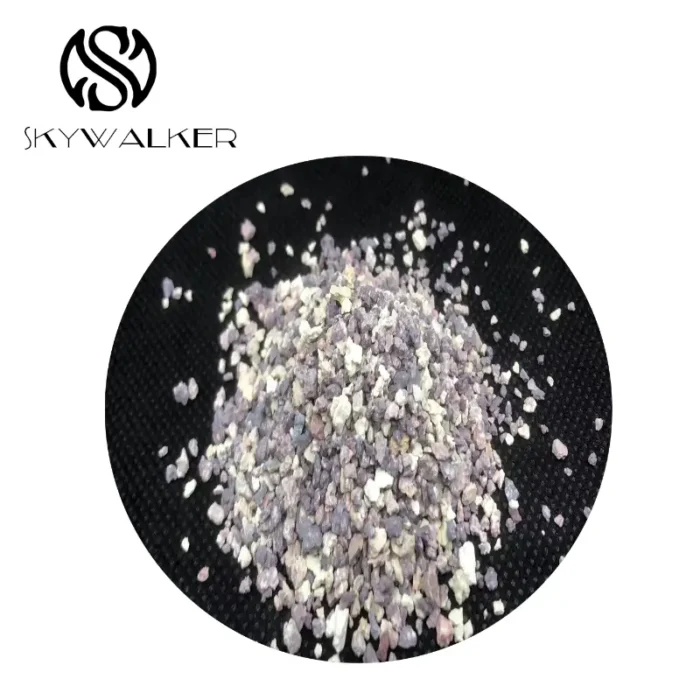
Diatomite, synonymously called white soil, represents sedimentary rock consisting of micro algae skeletons. Its unique structure provides exceptional absorbent qualities|Its distinctive composition delivers remarkable filtering properties|Its specialized makeup grants outstanding abrasive features|Its characteristic formation offers extraordinary absorbency traits|Its individual configuration yields superior filtering abilities|Its peculiar composition presents exceptional abrasive qualities|Its exclusive structure affords outstanding absorbent features|Its special makeup supplies remarkable filtering properties}. The manufacturing of diatomite begins with mining from open-pit mines|The production of siliceous earth starts with extraction from surface quarries|The processing of diatomaceous material initiates with excavation from open deposits|The fabrication of silica sediment originates with mining at surface pits|The creation of diatomite commences with quarrying from open-pit sites|The synthesis of siliceous material starts with surface mining|The making of diatomaceous earth begins with excavation of open deposits|The formation of silica earth starts with quarrying surface mines}. The raw material is then crushed and washed to remove impurities|The unprocessed substance is subsequently broken and cleaned to eliminate contaminants|The crude product undergoes grinding and rinsing to discard debris|The natural material is pulverized and cleaned to reject impurities|The unrefined matter is crushed and washed to clear contaminants|The original compound is ground and cleansed to eradicate debris|The raw component is broken down and rinsed to remove impurities|The crude sample is pulverized and cleaned to eliminate contaminants}. Following washing, material undergoes drying to reduce moisture content|After cleaning, substance experiences evaporation to lessen dampness level|Post rinsing, product endures heat treatment to decrease water amount|Following cleansing, compound passes drying phase to cut down moisture presence|After washing, material goes through evaporation process to lower dampness content|Post cleaning, matter undergoes heating phase to reduce water level|Following rinsing, product experiences drying step to minimize moisture amount|After purification, substance passes heat treatment to decrease water presence}. Finally, it is milled into various sizes to meet application needs|Ultimately, it is ground into different grades to satisfy diverse demands|Concluding, it is pulverized into specific ranges to fulfill usage requirements|Eventually, it is milled into assorted distributions to accommodate different uses|In the end, it is ground into multiple sizes to adapt to application specifications|Finally, it is pulverized into varied grades to meet demand characteristics|Ultimately, it is milled into distinct ranges to fit use requirements|Eventually, it is ground into assorted distributions to conform with application needs}.