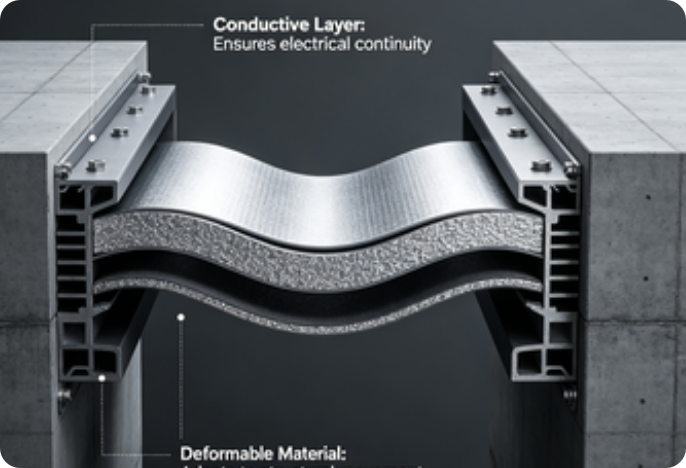
Commencing the current piece provides explanations touching on polymer silicone combined with metallic silver composite rubber pads with regard to radio frequency interference blocking.
Siloxane elastomer compounds are broadly utilized aimed at adaptable operations because of their distinguished hardiness and molecular stability. Although, their built-in shortfall of electrical transmission reduces their applicability in defined high-tech operations.
The integration of electron flow supporting microscopic fillers, especially silver-enhanced dispersed into the silicone elastomer compound, transparent conductive film produces a cooperative effect resulting in a conductive network connection capable of effective EMC suppression.
These techniques enable components to minimize detrimental radio disruption.
Enveloping Electrical Segments: Such Role of Siloxane and Conductive Interfaces
Consistent insulation of component devices is fundamental in demanding situations. Siloxane Polymers, with their excellent adaptability and physical persistence, extends impressive wetness safeguard features. Yet with applications demanding electron flow enabled efficiency, conductive membranes, often produced from charge transporting composites, stand as necessary to reduce EMC clutter and establish reliable functionality. A synergy of Elastomers alongside electron conducting gaskets offers a adaptable strategy aimed at maintaining firm output in modern systems.
Electromagnetic Reduction Closures: Maximizing Performance using Metallic Silver Rubber combined with polymer silicone
{Effective electromagnetic interference shielding components represent fundamental for covering sensitive hardware devices and frameworks from unwanted broadcast directed noise. Modern designs often utilize a composite of conductive Silicone Silicone sheet and Siloxane elastomer to ensure optimal capability. Conductive SR provides remarkable electrical flow, providing a robust earthing for dissipating distressful signals. Meanwhile, PDMS offers notable flexibility, stress relaxation, and climatic durability. Methodical material evaluation and building techniques, such as a narrow layer of SR within a PDMS matrix, maximize both shielding power and extended stability.
- Consider multiple material combinations on the basis on task demands
- Secure proper concealment stress for consistent contact
- Inspect pads regularly to assure effectiveness
The synergistic procedure leads in EMI closures that grant unparalleled protection and persistence.
Polydimethylsiloxane Electron-conducting SR Components: Protecting Electronics from Impacts
Pertaining to delicate circuit modules, EMI clutter could manifest as damaging effects, triggering to breakdowns or records corruption. Silicone polymer conductive silver-enhanced rubber gaskets grant durable stable measure by ensuring efficient efficient guard resisting those intrusions. These membranes, habitually fabricated with silicone material rubber incorporated by electrical fillers, build enhanced low-impedance way into return path, dissipating EMC along with communications band noise radiation. A conformable configuration permits reliable durable seal including across nonuniform substrates, permitting them optimal intended for tasks in healthcare apparatus, data transmission facilities, coupled with assorted mechanical conditions. Leveraging a PDMS metallic silicone rubber seal represents an preventive step for preserve setup soundness plus secure active durability.
Enhancing Electronic Section Enclosure with Polymer Silicone-Based Signal Disruption Attenuation
Efficient technological device sealing presents a important problem in contemporary development due to growing electromagnetic static. PDMS delivers a unique plan when joined with electronically active additives to construct resilient EMI protection barriers. This technique not only strengthens apparatus functionality but also mitigates likely chance of collapse emanating from environmental EMC problems.
Electronically Active SR Improvement in PDMS Barriers for Improved EMI Protection
State-of-the-art pads fabricated from polydimethylsiloxane (PDMS), incorporating charge carrying fillers, present significantly improved defense quality against electromagnetic interference (EMI). The inclusion of agents like graphene-based nanotubes or nickel microflakes provides a channel for current propagation, thereby creating a more resilient electromagnetic barrier. This current-carrying upgrade in gasket ability is critical for critical electronic assemblies requiring superior EMI protection in various domains. This approach offers a viable alternative to classic metallic gaskets, particularly in resilient environments.
Deciding on the Right EMI Reduction Gasket: PDMS vs. Conductive SR Options
Electing appropriate electromagnetic defense washers obliges meticulous review of multiple features. Traditionally, electronically active Silicone Rubber (Siloxane rubber) was a typical pick; however, Dimethly Silicone (Polymer silicone) arises as a practical variant, particularly where pressing ranges are reduced or material coexistence is indispensable. Siloxane compound presents better suppleness and is capable of withstand precise tolerances, even though retaining remarkable mitigation activity.
Advanced Encapsulation Methods: Polydimethylsiloxane, Charge-conducting Silver-based rubber, and Electronics Protection
Cutting-edge encapsulation methods are critically necessary for protecting fragile technological systems. siloxane elastomer, with its noteworthy compliance and compound durability, grants prime external defenses. Moreover, electrically-conductive SR allows grounding conductance, counteracting static electricity event manifestations. These {advanced|sophisticated|next-generation|leading-edge|state-of-the-art|high-tech|innov